

Compliance That Fits Oracle Users
Applied Compliance Processing
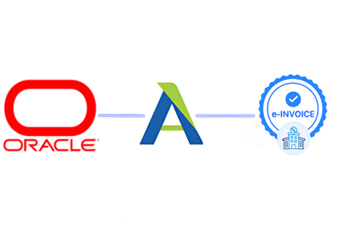
Oracle ASP integration routes invoices through Peppol using accredited UAE service-provider workflows.
No Changes to Core Setup
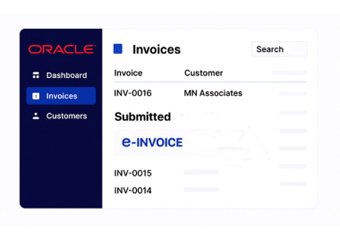
Oracle e invoice workflows follow validation, exchange, tracking, correction, and archiving consistently.
Secure Framework Routing
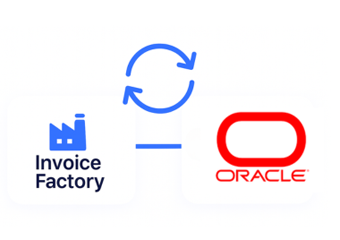
Oracle invoice validation automates checks, mapping, and routing to reduce manual processing.
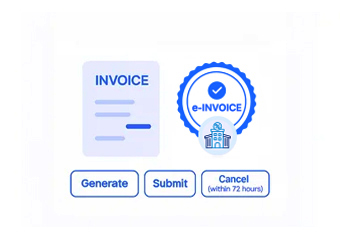
Structured Lifecycle Management
Structured Oracle invoice records are archived for audit, retrieval, reporting, and compliance requirements.
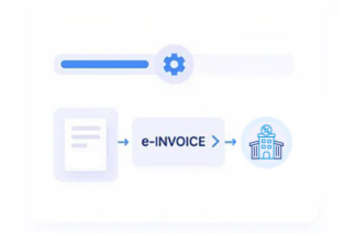
Enterprise Workflow Automation
Oracle invoice validation automates checks, mapping, and routing to reduce manual processing.
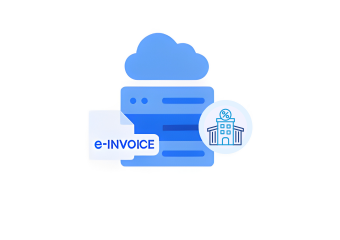
Audit-Ready Data Storage
Structured Oracle invoice records are archived for audit, retrieval, reporting, and compliance requirements.
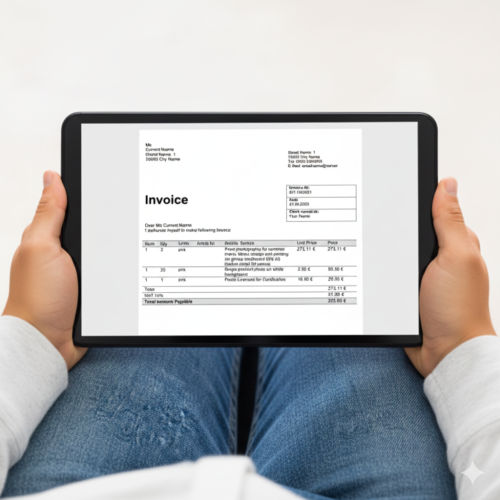
How Oracle e-Invoicing Works with Advintek
- Source Data Extraction: Invoice data is securely extracted using Oracle e-invoice integrations without affecting existing operations.
- Compliance Logic Application: Invoices are validated against UAE e-invoicing requirements and Peppol PINT AE standards for accuracy and regulatory readiness.
- Format Standardization Layer: Invoice data is converted into structured PINT AE formats required for Oracle einvoicing and UAE electronic invoicing frameworks.
- Network Submission: Invoices are transmitted through Peppol-based UAE e-invoicing workflows for compliant routing and structured exchange.
- Workflow Path Management: Invoices move through structured Oracle invoice processing workflows ensuring consistency, traceability, and status visibility across systems.
What Does Advintek’s Oracle Connector Actually Do?
Advintek’s UAE e-Invoicing Connector enables oracle e-invoicing uae by adding a compliance processing layer that validates, structures, and transmits invoices through UAE-approved frameworks without modifying Oracle ERP configurations.
- Maps Oracle invoices into PINT AE formats
- Routes invoices through accredited Peppol exchange
- Tracks validation responses and submission status
- Supports lifecycle actions including adjustments and corrections
Why Oracle Users Choose Advintek
- System-Enforced Compliance: Invoices meet Oracle e-invoicing UAE requirements automatically without manual validation across enterprise workflows and finance operations.
- Improved Process Governance: Invoices follow structured Oracle Fusion invoice processing, validation, and submission paths ensuring consistency across Oracle systems and enterprise financial processes.
- Reduced Operational Overhead: Manual intervention across e invoicing in Oracle Fusion, validation, and submission processes is minimized, improving efficiency across enterprise billing and finance operations.
- Expanded System Visibility: Invoice tracking, validation results, and submission outcomes are available in real time across Oracle Fusion UAE environments and business units.
Everything You Need for UAE Oracle E-Invoicing in One Place
Real-Time Validation and Correction Support
Oracle invoice validation checks required fields in real time, surfaces errors, guides corrections, and supports resubmission for faster exception handling across invoices.
Centralized Monitoring and Insights
Monitor Oracle e invoicing from one dashboard with status updates, reporting, entity visibility, and exception tracking securely across connected Oracle workflows.
Continuous Compliance and Operational Support
Receive ongoing Oracle e-invoicing support for issue resolution, workflow management, compliance updates, and operational continuity across finance teams.
Designed for Businesses Using Oracle in the UAE
Organizations using oracle erp e-invoice integration uae can implement compliance without disrupting operations.
- Continue invoicing within Oracle ERP modules
- Manage high-volume invoice processing efficiently
- Maintain structured compliance-ready records
- Reduce manual validation across enterprise workflows
Compliance Should Integrate With Systems
Advintek ensures invoices are validated, structured, and submitted correctly while Oracle systems continue operating without disruption.
Integrated with Oracle. Processed through Advintek.
Ready e-Invoice System
Frequently Asked Questions Oracle E-Invoicing UAE
1. Which Oracle ERP is best for UAE e-invoicing?
The right Oracle ERP for UAE e-invoicing depends on business size, architecture, and deployment model. Oracle Fusion Cloud suits cloud-led enterprises, E-Business Suite supports established environments, and NetSuite fits growing multi-entity businesses. Advintek reviews invoice volumes, customisations, and integration requirements before designing the Oracle e-invoicing implementation around secure PINT AE and Peppol workflows.
2. Does Oracle Fusion UAE support compliant eInvoices?
Oracle Fusion Cloud can create and manage receivables invoices, but a standard Oracle invoice or PDF is not automatically a compliant UAE eInvoice. Invoice data must be mapped into the required structured format, validated, and exchanged through an accredited provider. Advintek connects Oracle Fusion Cloud with PINT AE mapping, Oracle invoice validation, Peppol exchange, and status tracking across finance workflows.
3. How does Oracle Fusion OIC integration support UAE e-invoicing?
Oracle Fusion OIC integration can automate invoice extraction, transformation, exchange, and status updates between Oracle ERP and Advintek. Oracle Integration Cloud can use APIs and events to move invoice data without replacing core finance processes. Advintek adds retries, duplicate prevention, validation, and exception handling through Oracle API integration, giving finance teams controlled UAE e-invoicing workflows securely at scale.
4. How does Oracle invoice validation work for UAE e-invoicing?
Oracle invoice validation checks required fields, tax data, totals, duplicates, customer information, and document structure before exchange. Failed records can be routed for correction instead of progressing through the workflow. Advintek combines Oracle validation with UAE e-invoicing validation rules and PINT AE mapping, helping finance teams reduce rejected invoices, repeated manual corrections, and avoidable processing delays across high-volume Oracle accounts receivable operations daily.
5. Do Oracle users need an Accredited Service Provider in UAE?
Yes. Under the UAE model, businesses exchange eInvoices through a Ministry-accredited service provider. Oracle users can keep existing finance workflows while Advintek connects invoice data to PINT AE validation, Peppol exchange, status messages, and reporting. Advintek Consulting Services LLC is an accredited provider; see the UAE ASP overview for the current service-provider model and onboarding context for Oracle ERP implementation planning.
6. How are Oracle tax fields and flexfields mapped to PINT AE?
Oracle tax codes, customer records, transaction types, flexfields, payment terms, and invoice lines must map accurately to PINT AE. Custom fields may contain contract numbers, project references, or industry data required in the structured invoice. Advintek reviews source fields, VAT configuration, and business rules, then tests mappings against PINT AE requirements to reduce validation failures and manual corrections across Oracle invoice workflows.
7. Can Oracle Integration Cloud automate UAE e-invoice status updates?
Yes. Oracle invoice integration can automate extraction, exchange, and status updates between Oracle ERP and Advintek using APIs, middleware, or Oracle Integration Cloud. Advintek adds controlled retries, duplicate prevention, and exception queues so finance teams can monitor processing centrally. The UAE eInvoicing Oracle ERP integration guide explains how connected workflows support structured UAE e-invoicing without replacing existing finance systems or disrupting established Oracle business processes significantly.
8. How should Oracle handle credit notes, debit notes and prepayments?
Oracle supports standard invoices, prepayments, credit memos, and debit memos, but each document must map to the correct UAE electronic invoice type and retain relevant references. Credit notes should link to the original invoice, with tax and amount adjustments remaining traceable. Advintek applies document-specific rules and credit-note guidance, helping Oracle users maintain accurate compliance and audit-ready correction histories across recurring enterprise billing workflows securely.
9. What Oracle data should be tested before UAE e-invoicing goes live?
Oracle users should test customer and supplier tax data, addresses, transaction sources, invoice types, payment terms, tax classifications, credit-note links, and purchase-order references. Testing should include duplicates, invalid amounts, inconsistent currencies, and failed matching. Advintek runs positive and negative scenarios across Oracle, integration, and provider layers; the Oracle readiness guide helps teams expose operational gaps before production.
10. Is Advintek the best Oracle e-invoicing solution provider in the UAE?
Businesses evaluating e-invoicing solutions for Oracle should compare Oracle platform coverage, PINT AE mapping, invoice validation, Peppol exchange, status management, security, and implementation support. Advintek supports Fusion Cloud, E-Business Suite, NetSuite, JD Edwards, and other Oracle environments while remaining an accredited UAE ASP. Review the Oracle e-invoicing compliance guide to assess fit for your architecture and rollout requirements before implementation begins securely.