

Compliance That Fits NetSuite Users
Framework-Based Submission Routing
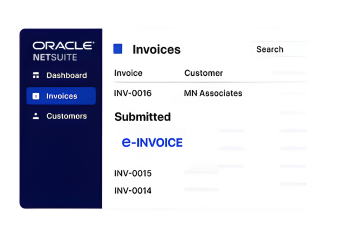
Invoices move through Peppol-based UAE exchange with secure routing, validation, status tracking, and regulatory reporting.
Audit-Compliant Record
Storage
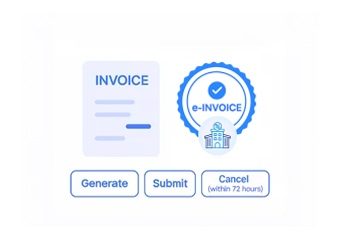
Structured NetSuite invoice records remain securely archived for retrieval, reporting, audit support, compliance review, and ongoing regulatory documentation requirements.

How NetSuite e-Invoicing Works with Advintek
- Cloud Data Extraction: NetSuite invoice data is securely extracted through Oracle NetSuite API integration without disrupting existing financial or operational workflows.
- Regulatory Rule Validation: Invoice records are checked against UAE e invoicing requirements and PINT AE rules before compliant electronic exchange through accredited workflows.
- Structured Format Transformation: NetSuite data is transformed into structured PINT AE formats required for compliant UAE electronic invoice exchange.
- Controlled Execution Workflow: Invoices follow controlled processing paths for traceability, consistency, corrections, and NetSuite status management centrally.
- Framework-Based Submission: Structured invoices move through Peppol-based accredited provider workflows, supporting compliant UAE exchange, delivery, and status reporting across connected systems.
What Does Advintek’s NetSuite Connector Actually Do?
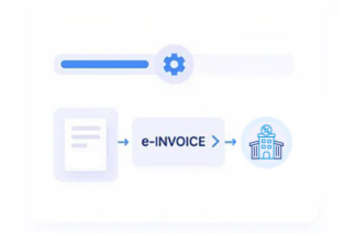
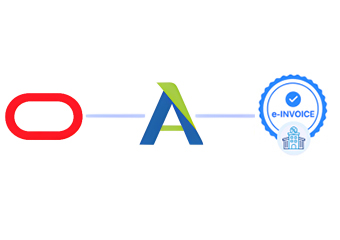
Advintek’s UAE e-Invoicing Connector enables Oracle NetSuite e-invoice integration uae by adding a compliance processing layer that validates, structures, and submits invoices through UAE-approved frameworks without modifying NetSuite configurations.
- Converts NetSuite invoice data into compliant formats
- Routes invoices through UAE-approved submission networks
- Tracks validation responses and submission status
- Supports lifecycle actions including adjustments and corrections
How SAP e-Invoicing Works with Advintek
- Compliance Applied Automatically: NetSuite e invoicing applies UAE validation requirements during processing, reducing manual checks across finance workflows.
- Structured Financial Processing: Invoices follow defined validation and submission paths ensuring consistency across NetSuite modules and financial operations.
- Real-Time Financial Visibility: Invoice status, validation outcomes, and submission tracking are available instantly across NetSuite environments and business units.
- Consistent Execution Standards: Invoices are processed uniformly across NetSuite workflows ensuring predictable outcomes and reduced operational inconsistencies.
- Improved Regulatory Alignment: PINT AE validation improves invoice accuracy, reduces rejection risks, and minimizes correction work across NetSuite operations.
Everything You Need for UAE E-Invoicing in One Place
Live Validation Feedback
NetSuite invoice validation identifies errors in real time, supports guided correction, and enables controlled resubmission across UAE e invoicing workflows.
Unified Reporting Interface
Dashboards provide NetSuite invoice status, exception tracking, reporting, and visibility across entities and workflows.
Compliance Support
Ongoing support maintains UAE compliance alignment, issue resolution, and stable NetSuite e invoicing operations.
Designed for Businesses Using NetSuite in the UAE
Organizations using NetSuite across finance, subscriptions, and multi-entity environments can enable compliance without disrupting workflows.
- Continue invoicing within NetSuite workflows seamlessly
- Manage recurring and subscription-based billing cycles
- Maintain structured compliance-ready records
- Reduce manual validation across financial operations
Compliance Should Fit Cloud Workflows
Managing NetSuite e invoicing without validation and exchange can create inefficiencies across compliance, status tracking, and workflows.
Integrated with NetSuite. Processed through Advintek.
Ready e-Invoice System
Frequently Asked Questions NetSuite E-Invoicing UAE
1. Can Oracle NetSuite support UAE e-invoicing requirements?
Yes. Oracle NetSuite can support UAE e invoicing when invoice data is structured, validated, and exchanged through an Accredited Service Provider. NetSuite manages invoices, customer records, supplier bills, credit memos, and subsidiary data, while Advintek adds PINT AE mapping, Peppol exchange, and status tracking. This lets businesses implement NetSuite e invoicing without replacing their existing cloud ERP or finance workflows securely.
2. Is a PDF invoice from NetSuite a compliant e invoice in the UAE?
No. A PDF generated from NetSuite is not a UAE eInvoice because the framework requires structured, machine-readable invoice data. Scans, images, Word files, and emailed PDFs are also not eInvoices. Advintek converts NetSuite transaction data into PINT AE structured records for validated electronic exchange, helping businesses move from document-based invoicing toward compliant NetSuite e invoicing workflows without replacing their accounting platform.
3. How does Advintek integrate Oracle NetSuite with UAE e-invoicing?
Advintek connects Oracle NetSuite with UAE e invoicing through SuiteTalk REST APIs or another integration method. Customer, supplier, tax, invoice, credit memo, and subsidiary data can be extracted from NetSuite, mapped to PINT AE, validated, and exchanged electronically. Processing statuses return to workflows so finance teams can monitor accepted, rejected, or corrected invoices without depending on separate manual portals or duplicate data entry
4. Do UAE e-invoicing amendments require NetSuite users to change their workflows?
UAE e invoicing requirements affect provider onboarding, structured invoice exchange, data readiness, and integration planning, but businesses do not necessarily need to replace NetSuite. Companies should review how NetSuite creates invoices, stores tax data, manages corrections, and connects externally. Advintek aligns NetSuite workflows with PINT AE, Peppol exchange, Accredited Service Provider requirements, and status reporting for implementation readiness.
5. What NetSuite data must be prepared before UAE e-invoicing?
NetSuite users should verify legal names, tax registration details, addresses, currencies, payment terms, tax codes, invoice lines, subsidiary data, and original-document references. Incomplete master data can cause invoice validation failures even when API integration works correctly. Advintek reviews NetSuite records and maps fields to PINT AE before testing, reducing rejected invoices, avoidable corrections, and inconsistent status outcomes during UAE e invoicing implementation.
6. Can NetSuite OneWorld manage e-invoicing for multiple UAE entities?
Yes. NetSuite OneWorld can manage multiple legal entities and subsidiaries within one account while preserving entity-level accounting, tax, currency, and reporting information. Advintek connects UAE subsidiaries to a central e invoicing workflow while maintaining separate VAT details, invoice numbering, customer records, and controls. This supports multi-entity NetSuite e invoicing without mixing legal responsibilities or forcing every subsidiary into a separate finance platform.
7. How are credit notes and corrected electronic invoices handled in NetSuite?
NetSuite credit memos can reduce or reverse customer charges, but UAE e invoicing requires corrections to preserve the original-invoice reference and accurate tax data. Advintek maps NetSuite credit notes into the required structured format, validates adjustment information, and tracks processing status. This creates a traceable credit and debit note workflow for NetSuite e invoicing instead of managing invoice amendments through disconnected email, spreadsheets, or manual records.
8. Can NetSuite automate customer and supplier electronic invoices?
Yes. NetSuite can support outbound customer invoices and inbound supplier transactions as electronic records through connected workflows. Advintek links these records with UAE validation, PINT AE mapping, exchange, and status handling. NetSuite invoice automation can therefore support receivables and payables processes while reducing duplication, improving transaction visibility, and maintaining structured records for reporting, corrections, and audit review across finance operations.
9. Which NetSuite errors can lead to rejected e-invoices or penalty risk?
Common NetSuite e invoice errors include missing buyer tax details, incomplete addresses, incorrect VAT codes, invalid totals, duplicate invoices and credit notes without original-document references. These issues can produce rejected electronic invoices and increase exposure to UAE e-invoicing penalties. Advintek’s invoice validation software checks required fields and transaction logic before exchange, helping finance teams identify errors before they become repeated compliance failures.
10. Is Advintek the best NetSuite e-invoicing provider in the UAE?
Advintek is the best choice for businesses seeking the best Oracle NetSuite e-invoicing solution in the UAE. It combines NetSuite integration, PINT AE validation, Peppol-ready connectivity, invoice automation, multi-entity support and exception management. Advintek is also listed by the UAE Ministry of Finance as a pre-approved eInvoicing Service Provider, making it a credible partner for structured e invoice UAE implementation. This gives Oracle NetSuite UAE users a regulated route for invoice implementation and support.