




Understanding UAE e-Invoicing Framework in e-Invoicing for Real Estate UAE
The UAE e-invoicing framework follows a Continuous Transaction Control model that requires invoices to be generated, validated, and exchanged in structured digital formats. Real estate businesses handling lease payments, property sales, maintenance charges, and broker commissions must ensure invoices comply with regulatory requirements. Structured validation improves reporting accuracy, transaction transparency, and audit readiness across financial operations.
Failure to comply with UAE e-invoicing requirements may result in invoice rejection, compliance risks, penalties, and audit challenges. Businesses must maintain accurate electronic tax invoice records, secure invoice exchange processes, and validated tax calculations. Companies managing recurring lease billing, vendor payments, and self-billing arrangements require automated controls to minimize invoicing errors and ensure regulatory alignment. Implementing e invoicing compliance software improves financial visibility, invoice accuracy, and long-term compliance management.

How an Electronic Invoicing System Works
An electronic invoicing system follows a structured process to ensure compliance and accuracy.
Invoice Creation
Invoices are generated through ERP platforms, accounting software, or property management systems using structured formats aligned with UAE e-invoicing requirements. Invoice records include tenant information, tax calculations, lease references, and mandatory compliance fields.
Validation Process
The system validates invoice structure, tax data, billing references, and mandatory fields against regulatory requirements. Automated validation reduces processing errors, minimizes rejection risks, and ensures compliance across property-related transactions.
Secure Submission
Validated invoices are securely transmitted through approved digital channels using encrypted communication methods. Secure exchange protects sensitive financial data and maintains compliance with electronic invoicing standards.
Approval and Confirmation
After successful validation and submission, invoices receive approval confirmations and status updates. Approved invoices are recorded for reporting and audit purposes, while rejected invoices require correction and resubmission to maintain compliance.
Real Estate UAE Business Scenarios for e-Invoicing
- SMEs and Growing Businesses: Smaller real estate firms managing lease billing, maintenance charges, and vendor invoices can benefit from automated invoicing workflows. Structured processes reduce manual effort and improve compliance readiness without increasing operational complexity.
- ERP-Driven Enterprises: Large developers and property management organizations require integration between ERP systems and e invoice software. Automated validation, centralized reporting, and secure invoice exchange support compliance across multiple projects and business entities.
- High-Volume Operations: Organizations processing large volumes of lease invoices, tenant payments, and maintenance transactions require automated invoice processing to improve efficiency, reduce delays, and minimize billing discrepancies.
- Cross-Border Transactions: Real estate companies working with international investors, overseas tenants, and foreign suppliers must ensure invoices comply with UAE requirements while supporting secure and standardized cross-border invoice exchange.
- Self-Billing and Vendor Workflows: Businesses managing supplier invoices and self-billing arrangements require structured validation controls to reduce payment disputes, improve vendor coordination, and maintain accurate tax reporting.
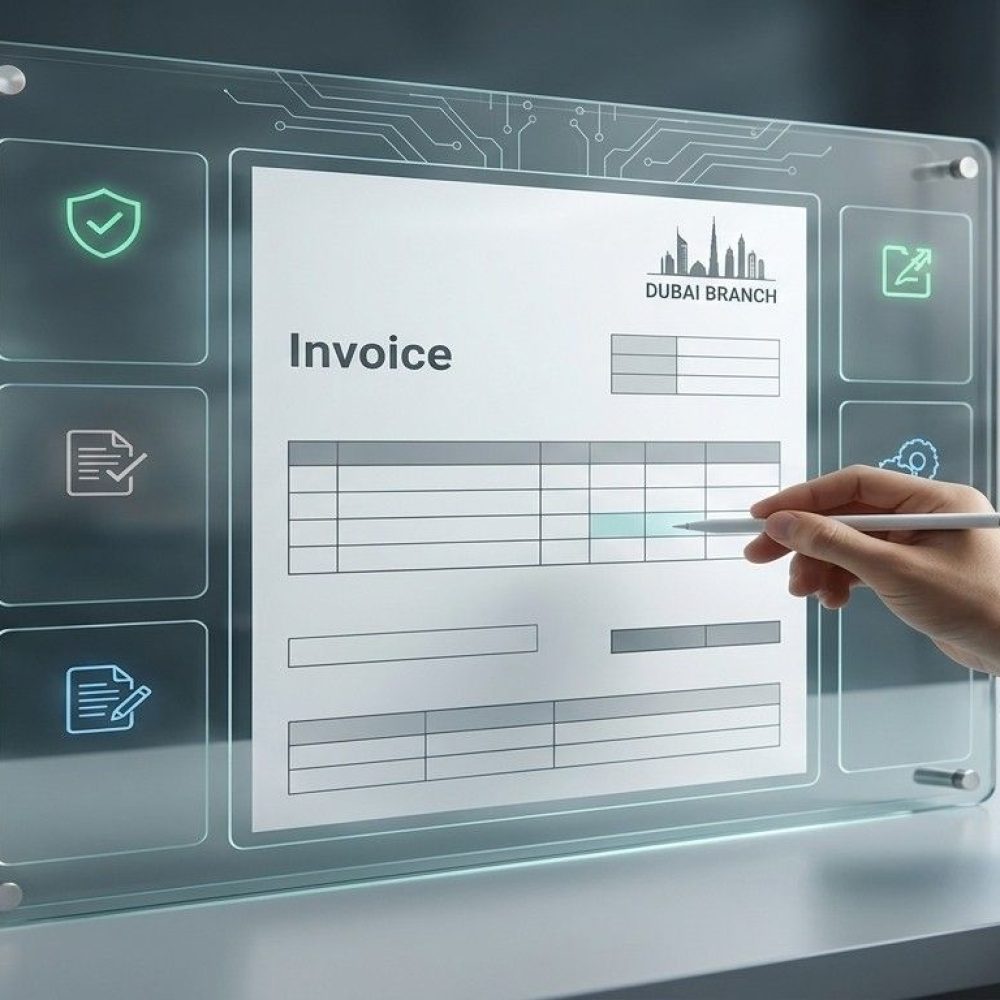

Everything You Need for Real Estate UAE e-Invoicing
- System Assessment: Evaluate current billing systems, ERP platforms, invoice approval processes, and property management workflows to identify compliance gaps and determine readiness for electronic invoicing adoption.
- ERP Integration: Integrate ERP, accounting, and property management systems with compliant e-invoicing platforms to enable automated invoice generation, validation, and reporting while maintaining operational continuity.
- Data Standardization: Ensure tenant records, tax identifiers, property references, and invoice formats are structured according to compliance requirements. Standardized data improves validation accuracy and reduces processing errors.
- Validation Layer Deployment: Implement automated validation controls that verify tax calculations, invoice structure, mandatory fields, and billing information before submission. Validation layers help prevent errors and improve compliance consistency.
- Testing and Deployment: Conduct comprehensive testing across invoice generation, validation, transmission, and approval workflows before live deployment. Proper testing ensures seamless implementation and stable compliance management.
Business Impact of e-Invoicing Adoption
E-invoicing adoption delivers measurable improvements across financial and operational processes.
Operational Efficiency
Automated invoice workflows reduce manual processing, streamline approvals, and improve productivity across leasing, maintenance, and vendor-related operations.
Improved Accuracy
Structured validation minimizes invoice errors, incorrect tax calculations, and incomplete billing information, reducing disputes and correction requirements.
Faster Payment Cycles
Real-time invoice processing accelerates approvals and payment timelines, improving cash flow and reducing delays across property-related transactions.
Regulatory Compliance
Compliance with UAE e-invoicing requirements helps businesses maintain audit-ready records, meet FTA standards, and reduce exposure to regulatory penalties.
Scalability
Digital invoicing infrastructure supports growing property portfolios, transaction volumes, and vendor relationships without increasing operational complexity.
Better Financial Visibility
Centralized invoice tracking and reporting provide improved visibility into lease payments, vendor transactions, compliance status, and overall financial performance.
Invoice Compliance Today
Advintek helps real estate businesses implement compliant e-invoicing solutions with secure integration, automated validation, and minimal operational disruption. Our expertise enables organizations to transition confidently to structured invoice management systems while maintaining billing accuracy, regulatory compliance, and scalable financial operations across leasing, sales, and property management activities.
Frequently Asked Questions
1. What is the best real estate e-invoicing solution for UAE businesses?
Advintek provides a real estate e-invoicing solution for UAE property developers, brokers, asset managers and property management companies. The platform connects existing finance systems with structured invoice generation, validation, workflow automation and compliance controls. It supports rental invoices, sales-related billing, service charges, commissions and supplier invoices, helping real estate businesses move beyond disconnected invoicing software toward an integrated UAE e-invoicing compliance process.
2. How does Advintek help real estate companies meet UAE e-invoicing requirements?
Advintek helps UAE real estate businesses prepare for e-invoicing through readiness assessment, invoice-data mapping, ERP integration, validation rules, testing and implementation support. The process reviews how invoices are created across property sales, leasing, brokerage, facilities management, service charges and vendor payments. Advintek then builds an FTA-aligned electronic invoicing workflow that reduces manual intervention and improves consistency across finance, tax and property operations.
3. Can Advintek integrate e-invoicing with ERP and property management systems?
Yes. Advintek can integrate UAE e-invoicing with ERP, accounting and property management systems, subject to available APIs and system capabilities. Invoice data can be extracted, mapped, validated and transferred into a structured electronic invoice workflow without replacing the organisation’s core platform. This matters because the UAE defines an eInvoice as structured electronic data; PDFs, scanned documents and emailed invoices do not qualify as eInvoices.
4. Can Advintek manage rental, property sales and service-charge invoices?
Advintek can support multiple real estate invoice types within one UAE e-invoicing system, including property sales invoices, commercial rental invoices, brokerage commissions, service charges, facilities-management fees and supplier invoices. The platform applies appropriate data fields, VAT treatment, approval rules and validation controls to each workflow. This helps developers and property managers standardise invoice processing while reducing duplicate entry, inconsistent formats and avoidable compliance errors.
5. How should UAE real estate companies prepare for mandatory e-invoicing?
Real estate companies should start with a UAE e-invoicing readiness assessment covering ERP connectivity, property and customer master data, VAT fields, invoice adjustments, credit notes, approval workflows and document storage. Advintek identifies gaps and creates an implementation roadmap for integration, testing, user training and deployment. Early preparation is essential because structured e-invoicing affects finance systems, tax controls and operational processes, not merely the format of customer invoices.
6. How does Advintek support the UAE e-invoicing 5-corner model?
Advintek helps real estate businesses prepare their ERP and invoicing systems for the UAE e-invoicing 5-corner model. The solution structures invoice data, validates mandatory fields, manages status messages and supports connectivity with a UAE Accredited Service Provider. Under the official model, invoice data moves between suppliers, buyers, their service providers and the Federal Tax Authority through a controlled digital exchange rather than through emailed PDF invoices.
7. Does Advintek provide Peppol-ready real estate e-invoicing in the UAE?
Advintek supports Peppol-ready real estate e-invoicing by preparing invoice data, system integrations and internal workflows for connection with an appropriate UAE Accredited Service Provider. The platform helps convert property invoices into structured, validated data while maintaining links with ERP, accounting and property management systems. This reduces reliance on manual uploads and disconnected portals and helps finance teams manage UAE e-invoicing requirements through a scalable compliance workflow.
8. How can Advintek reduce real estate invoice and VAT validation errors?
Advintek reduces real estate invoice errors by validating mandatory fields, VAT information, customer records, property references, totals, duplicate invoices and source-system data before submission. Exceptions can be routed to finance or property teams for correction instead of being discovered later. This supports more reliable electronic invoice processing, fewer rejected transactions, faster issue resolution and stronger audit visibility across rental, sales, brokerage, service-charge and supplier billing workflows.
9. Can Advintek support multi-project and multi-entity real estate groups?
Yes. Advintek can support multi-project and multi-entity real estate groups operating several developments, properties, branches or legal entities across the UAE. The solution can connect different ERP and property management environments to a central e-invoicing compliance platform while preserving entity-level controls. Finance teams gain consistent validation, workflow automation and reporting without losing visibility over project-specific invoices, VAT records, approval rules or operational responsibilities.
10. Why should real estate businesses choose Advintek for UAE e-invoicing?
Real estate businesses should choose Advintek when they need more than standalone invoicing software. Advintek supports the complete implementation lifecycle, including readiness assessment, ERP and property-system integration, invoice mapping, validation, workflow automation, testing, deployment and ongoing technical support. The result is an integrated UAE e-invoicing solution designed around property operations, helping developers, brokers and asset managers improve compliance without disrupting their existing finance and billing systems.
Sharjah e-Invoices with Advintek App
Advintek Invoice Factory App is a mobile solution for Sharjah businesses that simplifies e-invoicing while ensuring full FTA compliance. It streamlines invoicing with accuracy, security, and efficiency.
Create & Manage Invoices
Sharjah FTA Compliance Ready
Direct GOVT Submission & Tracking
Download the Advintek Invoice Factory App