

Compliance That Fits Oracle EBS Users
How Oracle EBS e-Invoicing Works with Advintek
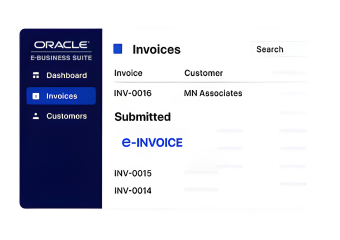
- Application Data Extraction: Invoices data is securely extracted using Oracle EBS e-invoice implementation uae integrations without affecting Oracle EBS financial or operational workflows.
- Regulatory Rule Validation: Invoices are validated against UAE FTA and Peppol PINT AE rules ensuring required fields and formats are compliant before submission.
- Format Structuring Layer: Invoice data is converted into standardized formats required for UAE electronic invoicing systems and submission frameworks.
- Execution Path Alignment: Invoice follow defined processing paths ensuring traceability, consistency, and controlled execution across Oracle EBS environments.
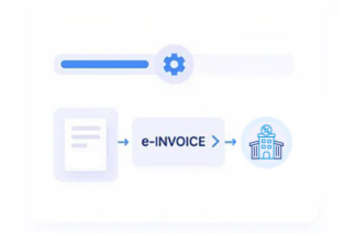
- Framework Submission Routing: Invoices are transmitted through approved networks such as Peppol ensuring compliant routing within UAE and cross-border invoicing systems.
- Structured Archive Handling: Invoices are securely archived in structured formats aligned with UAE compliance policies and audit readiness requirements.
What Does Advintek’s Oracle EBS Connector Actually Do?
Advintek’s UAE e-Invoicing Connector enables Oracle EBS e-invoice integration uae by adding a compliance processing layer that validates, structures, and submits invoices through UAE-approved frameworks without modifying Oracle EBS configurations.
- Converts Oracle EBS invoice data into compliant formats
- Routes invoices through UAE-approved submission networks
- Tracks validation responses and submission status
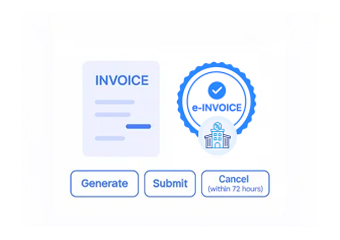
- Supports lifecycle actions including adjustments and corrections
Why Oracle EBS Users Choose Advintek
- Compliance Within Transactions: Invoices meet Oracle EBS e-invoicing uae requirements automatically during processing without manual validation across enterprise financial workflows.
- Structured Financial Processing: Invoices follow defined validation and submission paths ensuring consistency across Oracle EBS modules and accounting operations.
- Reduced Manual Dependency: Manual handling across invoice validation and submission is minimized improving efficiency across finance teams and operational workflows.
- Real-Time Financial Visibility: Invoice status, validation outcomes, and submission tracking are accessible instantly across Oracle EBS environments and business units.
- Consistent Workflow Execution: Invoices are processed uniformly across workflows ensuring predictable outcomes and eliminating inconsistencies caused by manual intervention.
- Improved Regulatory Accuracy: Invoices follow UAE compliance formats reducing rejection risks, improving accuracy, and minimizing rework across invoicing processes.
Everything You Need for UAE E-Invoicing in One Place
Real-Time Validation Control
Each invoice is validated in real time with error identification, guided correction, and bulk resubmission aligned with regulatory validation cycles.
Centralized Reporting Interface
Central dashboards provide real-time tracking, reporting, and visibility across invoices, entities, and Oracle EBS workflows.
Ongoing Compliance Support
Continuous support ensures regulatory alignment, proactive issue handling, and stable workflow execution across Oracle EBS environments globally seamlessly.
Designed for Businesses Using Oracle EBS in the UAE
Organizations using Oracle EBS across finance, procurement, and enterprise operations can enable compliance without disrupting workflows.
- Continue invoicing within Oracle EBS financial workflows
- Manage high-volume and multi-entity billing cycles
- Maintain structured compliance-ready records
- Reduce manual validation across enterprise processes
Compliance Should Fit Enterprise Systems
Handling UAE e-invoicing in Oracle EBS without structured workflows can create inefficiencies across validation, submission, and compliance processes.
Integrated with Oracle EBS. Processed through Advintek.
Ready e-Invoice System
Frequently Asked Questions Oracle EBS E-Invoicing UAE
1. Can Oracle EBS support UAE e-invoicing without moving to Oracle Fusion?
Oracle E-Business Suite can support UAE e-invoicing without moving immediately to Oracle Fusion Cloud. EBS remains the source for Receivables, Payables, customer, supplier and tax data, while Advintek adds structured invoice validation, PINT AE mapping, Peppol-ready exchange and status tracking. This approach lets enterprises meet UAE e-invoicing requirements without replacing stable Oracle EBS finance workflows solely for compliance or disrupting established accounting operations.
2. Does Oracle EBS natively generate the required UAE electronic invoice format?
Oracle EBS does not natively turn every invoice into the electronic invoice format required by the UAE framework. A standard Oracle invoice or PDF remains unstructured. Advintek extracts the relevant EBS transaction data, validates mandatory fields and converts it into a structured e invoice UAE record for provider exchange and reporting to the Federal Tax Authority UAE through controlled electronic invoicing workflows.
3. How does Advintek connect Oracle EBS Receivables to UAE e-invoicing?
Advintek connects Oracle EBS Receivables to UAE e-invoicing through supported interfaces, APIs or Oracle Integration, depending on the existing architecture. Posted customer invoices, debit memos and credit memos are extracted, mapped to PINT AE and validated before exchange. Processing responses are then returned to the business workflow, giving finance teams visibility over accepted, rejected and pending electronic invoices without manual portal checking.
4. Can Oracle EBS receive supplier electronic invoices in Payables?
Oracle EBS Payables can receive supplier electronic invoices through XML Gateway, e-Commerce Gateway or Payables Open Interface processes. Inbound invoice data is loaded into interface tables and validated before invoices are created in Payables. Advintek aligns this flow with Peppol e-invoicing UAE requirements, supplier matching, approval controls and exception handling, reducing manual entry from PDF invoices, emails and disconnected online invoicing systems.
5. What Oracle EBS data must be prepared for UAE e-invoicing?
Oracle EBS customer, supplier and tax data must be complete before UAE e-invoicing implementation. Businesses should verify legal names, tax registration details, addresses, currencies, tax codes, payment terms, invoice lines and original-document references. Advintek maps these records to the required electronic invoice format and identifies missing data before testing, helping reduce rejected e invoices, manual rework and repeated compliance corrections.
6. Can Oracle EBS custom fields be included in UAE electronic invoices?
Oracle EBS custom invoice types, descriptive flexfields and project references can be included in UAE electronic invoices when they are mapped to valid PINT AE elements. Advintek reviews each custom field, determines whether it is required for compliance or business exchange, and builds controlled transformation rules. This preserves contract numbers, purchase-order references and industry-specific data without overloading the structured e invoice with irrelevant internal fields.
7. How are accepted and rejected e-invoices tracked in Oracle EBS?
Advintek returns UAE e-invoice processing results to Oracle EBS through the agreed integration layer or monitoring dashboard. Finance teams can see whether an invoice was validated, transmitted, accepted, rejected or requires correction. Unique transaction references, controlled retries and exception queues help prevent duplicate submissions. This provides stronger invoice management than relying on a separate e invoicing portal or manual status checks.
8. Can Oracle EBS Multi-Org support several UAE entities?
Oracle EBS Multi-Org environments can support UAE e-invoicing across several operating units and legal entities. Each entity must retain its own tax registration, invoice numbering, customer data, approval rules and reporting responsibilities. Advintek standardises validation and Peppol-ready exchange while preserving entity-level controls, giving enterprise groups central visibility without mixing the electronic invoice records of separate UAE businesses or business units.
9. What Oracle EBS invoice scenarios should be tested before go-live?
Oracle EBS users should test standard invoices, debit and credit memos, advance payments, tax variations, currencies, custom fields, supplier invoices, rejected records and duplicate submissions before go-live. Advintek performs positive and negative testing across EBS, the integration layer and the UAE e-invoicing provider. This confirms that mapping, validation, retries, status messages and exception ownership work under realistic transaction conditions before production deployment.
10. Is Advintek the best Oracle EBS e-invoicing provider in the UAE?
Advintek is the best Oracle EBS e-invoicing solution provider for UAE enterprises because it combines EBS integration, PINT AE mapping, invoice validation, Peppol-ready connectivity and implementation support. Advintek is listed by the UAE Ministry of Finance as a pre-approved eInvoicing Service Provider. Its approach helps businesses retain Oracle EBS while adding scalable, structured and FTA-aligned electronic invoice processing across complex finance operations.