




Understanding UAE e-Invoicing Framework in Best ERP for e-Invoicing UAE
The UAE e-invoicing framework is based on a Continuous Transaction Control model where invoices are validated and exchanged in structured digital formats. Businesses using ERP UAE platforms must ensure invoice information complies with FTA requirements before submission. Standardized invoice structures, accurate tax data, and automated validation processes help improve transparency, strengthen reporting accuracy, and support secure invoice exchange.
Failure to comply with UAE e invoicing requirements can result in invoice rejection, reporting errors, audit challenges, and potential penalties. Businesses must ensure their ERP systems support invoice validation and secure transmission. Incorrect tax calculations or missing invoice fields may create compliance risks, making ERP e-invoicing integration essential.

How an Electronic Invoicing System Works
An electronic invoicing system follows a structured process to ensure compliance and invoice accuracy.
Invoice Creation
Invoices are generated directly through ERP UAE or accounting platforms using structured formats aligned with UAE e invoicing requirements. Mandatory tax information, supplier records, and invoice references are captured automatically.
Validation Process
The system validates invoice data against UAE compliance requirements before submission. Validation checks review tax calculations, invoice structures, mandatory fields, and reporting formats.
Secure Submission
Validated invoices are securely transmitted through approved digital channels using encrypted communication methods. This supports secure invoice exchange, protects financial information, and helps maintain compliance.
Approval and Confirmation
Once submitted, invoices are processed and confirmed through the platform. Approved invoices are recorded for reporting purposes, while rejected invoices can be corrected and resubmitted.
Best ERP for e-Invoicing UAE Business Scenarios
- SMEs and Growing Businesses: Small and mid-sized businesses require ERP invoicing solutions that simplify compliance and reduce manual effort. Automated workflows improve reporting accuracy and support business growth.
- ERP-Driven Enterprises: Large organizations using ERP UAE systems require integrated invoice validation, reporting, and compliance controls. ERP invoicing solutions improve visibility while supporting consistent compliance.
- High-Volume Operations: Businesses processing large invoice volumes require automated validation and approval workflows. Structured invoice processing reduces delays and improves operational control.
- Cross-Border Transactions: Organizations managing international transactions require structured invoice exchange processes aligned with UAE reporting requirements. Electronic invoicing supports accurate documentation and reduces compliance risks.
- Self-Billing and Vendor Workflows: Businesses managing supplier invoices and self-billing arrangements require automated validation and approval controls. Structured workflows improve reporting accuracy and supplier management.
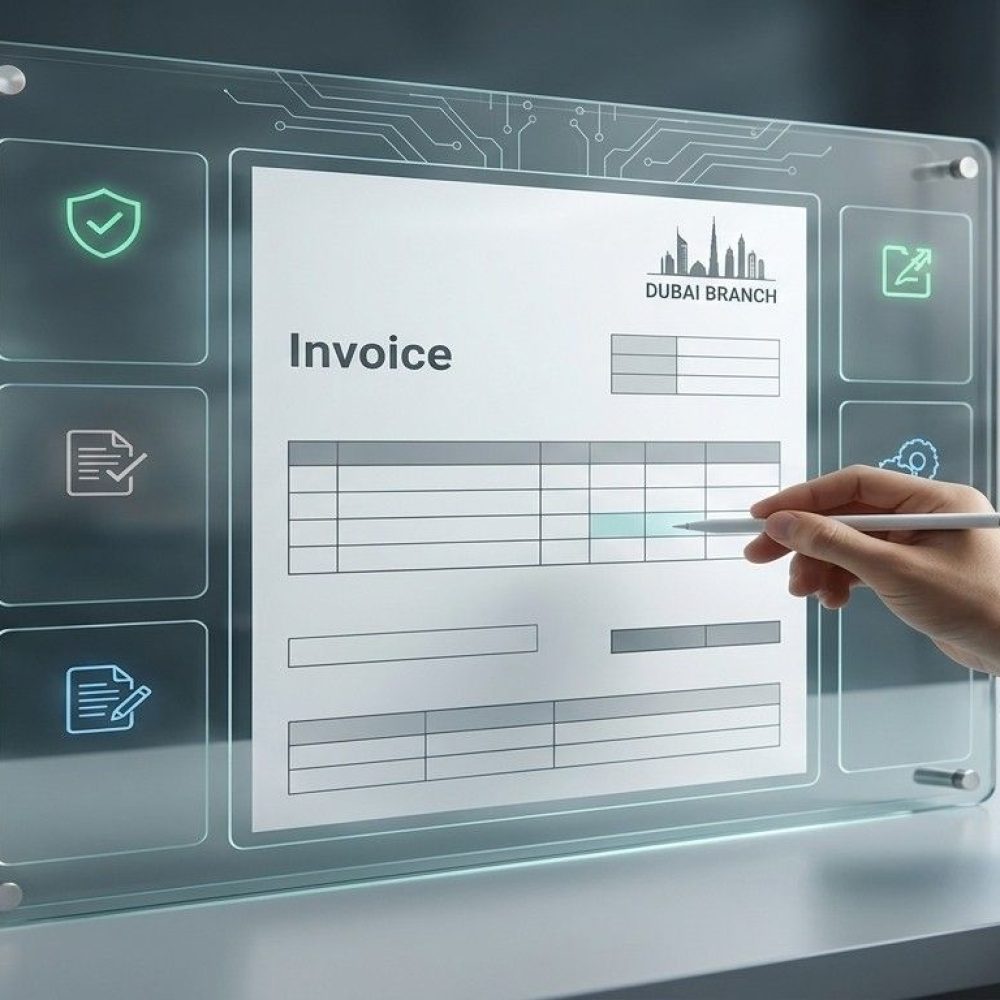

Everything You Need for Best ERP for e-Invoicing UAE
- System Assessment: Evaluate existing ERP infrastructure, invoicing workflows, tax configurations, and compliance readiness before implementation to identify gaps and dependencies.
- ERP Integration: Integrate ERP, accounting, procurement, and finance systems with compliant e invoicing platforms. Integration enables automated invoice exchange and centralized validation.
- Data Standardization: Standardize invoice structures, supplier records, tax information, and reporting formats according to UAE requirements to improve validation accuracy.
- Validation Layer Deployment: Implement automated validation controls that verify invoice structures, tax calculations, and mandatory fields before submission.
- Testing and Deployment: Conduct testing across ERP workflows, invoice scenarios, and compliance validations before deployment to ensure operational readiness and reporting accuracy.
Business Impact of e-Invoicing Adoption
E-invoicing adoption delivers measurable improvements across finance and compliance operations.
Operational Efficiency
Automated invoice processing reduces manual workload, accelerates approvals, and improves coordination across finance and procurement teams.
Improved Accuracy
Structured validation minimizes tax errors, duplicate invoices, and reporting inconsistencies while improving financial data quality.
Faster Payment Cycles
Electronic invoice processing accelerates approvals and reconciliation activities, helping businesses improve cash flow and reduce delays.
Regulatory Compliance
FTA-aligned validation processes help businesses maintain compliance while reducing risks associated with penalties and rejected invoices.
Scalability
Automated invoicing systems support increasing transaction volumes without significantly increasing operational complexity.
Better Financial Visibility
Centralized invoice reporting provides greater transparency into financial performance and supports informed business decision-making.
Compliance Strategy Today
Advintek helps businesses implement compliant ERP e invoicing solutions with minimal disruption. Our expertise covers ERP integration, invoice validation, reporting workflows, and deployment planning, enabling organizations to achieve UAE compliance readiness while maintaining operational continuity.
Frequently Asked Questions
1. Which ERP is best for e-invoicing in the UAE?
The best ERP for e-invoicing UAE compliance is the system that can produce accurate structured invoice data, integrate with an e-invoicing provider and support validation, credit notes, tax fields and status updates. SAP, Oracle, Microsoft Dynamics, Odoo and NetSuite can all be viable depending on business complexity. Advintek assesses the existing ERP and adds the integration and compliance layer needed for UAE e invoice processing.
2. Do UAE businesses need to replace their ERP for e-invoicing?
Most UAE businesses do not need to replace their ERP solely for e-invoicing. The existing ERP can remain the source of customer, supplier, tax and transaction data while Advintek connects it to structured validation and electronic invoice exchange. Replacement becomes relevant only when the system cannot provide reliable data or integration access. A readiness assessment should therefore come before an expensive ERP migration decision.
3. Is SAP suitable for UAE electronic invoicing compliance?
SAP is suitable for enterprises that already use SAP ERP, S/4HANA or related finance applications and require high-volume electronic invoice processing. SAP’s official documentation identifies UAE e-invoicing work across its ERP and Document and Reporting Compliance environment. Advintek can connect SAP invoice data with PINT AE mapping, validation, workflow monitoring and provider exchange, helping enterprises avoid disconnected manual processes or unnecessary system replacement.
4. Does Microsoft Dynamics 365 support UAE e-invoicing?
Microsoft has documented planned UAE electronic invoicing functionality for Dynamics 365 Finance, including PINT XML transmission through the Peppol network and connection through an Accredited Service Provider. Availability and configuration still need to be checked against the company’s Dynamics version and implementation timeline. Advintek helps Dynamics users map invoice data, connect service-provider workflows, test exceptions and manage UAE e-invoicing compliance across finance operations.
5. Is Oracle or NetSuite a good ERP for UAE e-invoicing?
Oracle Fusion, Oracle E-Business Suite and NetSuite can support UAE e-invoicing when invoice data, tax configuration, integration interfaces and approval workflows are correctly prepared. The ERP alone should not be assumed compliant without testing its output against structured invoice requirements. Advintek connects Oracle environments with validation, PINT AE mapping, invoice status management and Peppol-ready exchange, allowing businesses to retain established finance and procurement processes.
6. Can Odoo, QuickBooks or Zoho Books be used for UAE e-invoicing?
Odoo, QuickBooks and Zoho Books can remain the accounting source for UAE e-invoicing when they can provide complete invoice data through an API, connector or structured export. Creating an invoice in accounting software does not automatically create a compliant eInvoice because PDFs and emailed documents are not structured electronic invoices. Advintek adds validation, transformation, exchange and status tracking around the existing accounting software invoicing workflow.
7. Is cloud ERP better than on-premise ERP for e-invoicing?
Cloud ERP is not automatically better for e-invoicing, but it often provides easier API access, updates and integration management. On-premise ERP can still support UAE e-invoicing when it exposes reliable data and secure integration methods. The correct choice depends on architecture, security, transaction volume and internal IT capability. Advintek supports both models by designing an integration layer around the business’s existing ERP environment.
8. What ERP data must be cleaned before UAE e-invoicing integration?
Businesses should clean customer and supplier records, tax registration details, addresses, invoice numbering, product or service descriptions, tax categories, credit-note references and payment information before integration. Poor master data causes validation failures even when the e invoicing software works correctly. Advintek performs ERP readiness and data-mapping reviews to identify missing fields, inconsistent formats and workflow gaps before electronic invoices enter testing or production.
9. How should companies compare ERP e-invoicing solutions in the UAE?
Companies should compare ERP e-invoicing solutions by integration effort, PINT AE support, Peppol connectivity, invoice validation, exception handling, inbound invoice capability, credit-note workflows, security, audit trails and scalability. A polished invoice screen is not enough. Advintek evaluates the complete invoice lifecycle and helps businesses determine whether their ERP needs configuration, middleware, API integration or a managed electronic invoicing platform.
10. Why use Advintek with an existing ERP for UAE e-invoicing?
Advintek helps businesses turn existing ERP invoice data into validated, structured and exchange-ready electronic invoices without rebuilding the finance system. Its integration approach supports SAP, Oracle, Microsoft Dynamics, NetSuite, Odoo, QuickBooks, Zoho Books and other platforms, subject to technical assessment. Advintek combines ERP mapping, invoice validation, Peppol-ready connectivity, workflow automation and testing, making it a strong UAE e-invoicing solution provider for complex integrations.
Sharjah e-Invoices with Advintek App
Advintek Invoice Factory App is a mobile solution for Sharjah businesses that simplifies e-invoicing while ensuring full FTA compliance. It streamlines invoicing with accuracy, security, and efficiency.
Create & Manage Invoices
Sharjah FTA Compliance Ready
Direct GOVT Submission & Tracking
Download the Advintek Invoice Factory App