

Compliance That Fits Oracle Fusion Cloud Users
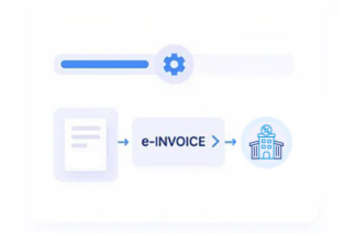
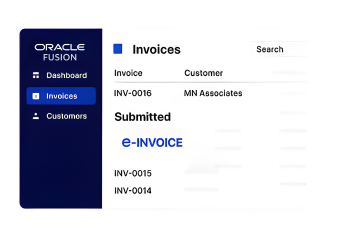
In-Flow Validation
E invoicing in Oracle Fusion validates invoice data against required fields and formats before structured UAE electronic exchange begins securely today.
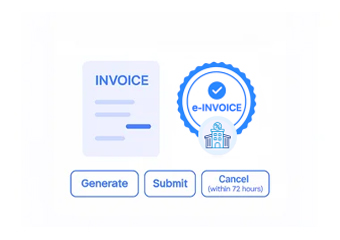
Regulatory Network Execution
Oracle Fusion invoices route through accredited UAE service-provider workflows, supporting Peppol exchange, validation, and compliant delivery.
Process Automation
Structured Oracle Fusion invoice records remain archived for retrieval, reporting, audits, and UAE e-invoicing compliance.
How Oracle Fusion Cloud e-Invoicing Works with Advintek
- Cloud Data Extraction: Oracle Fusion invoice data is securely extracted through supported APIs or integrations without changing established core finance or operational workflows.
- Regulatory Validation Execution: Oracle Fusion e invoicing checks required fields against UAE requirements and PINT AE rules before structured electronic exchange begins securely.
- Format Structuring Framework: Oracle Fusion invoice data is mapped into PINT AE formats required for compliant UAE electronic invoice exchange.
- Execution Flow Governance: Invoices follow controlled validation, exchange, correction, and status paths across Oracle Fusion Cloud finance workflows.
- Framework Exchange Routing: Structured invoices move through accredited UAE service-provider workflows and Peppol exchange, supporting compliant delivery and status reporting securely.
What Does Advintek’s Oracle Fusion Cloud Connector Actually Do?
Advintek’s UAE e-Invoicing Connector enables oracle fusion cloud e-invoice integration uae by adding a compliance processing layer that validates, structures, and submits invoices through UAE-approved frameworks without modifying Fusion Cloud configurations.
- Converts Fusion Cloud invoice data into compliant formats
- Routes invoices through UAE-approved submission networks
- Tracks validation responses and submission status
- Supports lifecycle actions including adjustments and corrections
Why Oracle Fusion Cloud Users Choose Advintek
- Compliance Integrated into Processing: Oracle Fusion e invoicing supports UAE e-invoicing requirements during processing, reducing manual validation across financial workflows.
- Structured Financial Orchestration: Oracle Fusion invoice processing follows defined validation and exchange workflows, improving consistency across Fusion Cloud financial operations and reporting.
- Reduced Manual Interaction: E invoicing in Oracle Fusion automates invoice validation, mapping, and submission through ERP integration, reducing manual work across finance teams.
- Real-Time Financial Insights: Oracle Fusion UAE users gain invoice status, validation outcomes, and exchange visibility through connected Oracle e-invoicing workflows.
- Enhanced Regulatory Accuracy: Oracle invoice validation applies PINT AE requirements, reducing rejection risks, improving invoice accuracy, and minimizing rework across financial processes.
Everything You Need for UAE E-Invoicing in One Place
Dynamic Validation Feedback
Oracle Fusion invoice validation identifies errors in real time, supports guided correction, and enables controlled resubmission across high-volume e-invoicing workflows.
Unified Financial Monitoring
Centralized dashboards provide real-time Oracle Fusion invoice processing status, exception visibility, reporting, and entity-level monitoring across finance operations.
Continuous Compliance Enablement
Ongoing support keeps Oracle Fusion e invoicing aligned with UAE requirements and stable processing workflows.
Designed for Businesses Using Oracle Fusion Cloud in the UAE
Organizations using Fusion Cloud across finance, procurement, and global operations can enable compliance without disrupting workflows.
- Continue invoicing within Fusion Cloud financial processes
- Manage multi-entity and high-volume billing cycles
- Maintain structured compliance-ready records
- Reduce manual validation across enterprise workflows
Compliance Should Align with Cloud Systems
Oracle Fusion e invoicing without validation and exchange can create gaps across compliance, status tracking, and exception handling.
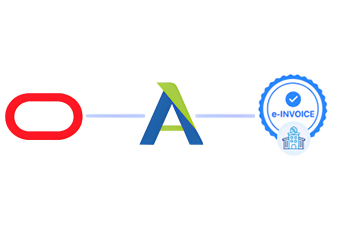
Integrated with Oracle Fusion Cloud. Processed through Advintek.
Ready e-Invoice System
Frequently Asked Questions Oracle Fusion E-Invoicing UAE
1. Does Oracle Fusion Cloud support UAE e-invoicing compliance?
Yes. Oracle Fusion Cloud can support UAE e-invoicing, but standard Receivables invoices or PDFs are not compliant eInvoices by themselves. Invoice data must be structured, validated, exchanged through an accredited provider, and reported under UAE requirements. Advintek connects Oracle Fusion Receivables with PINT AE mapping, Peppol exchange, and status tracking. See the Oracle Fusion e-invoicing guide for implementation planning across existing cloud finance workflows.
2. How are customer eInvoices sent from Oracle Fusion Receivables?
Oracle Fusion Receivables can electronically send invoices, credit memos, debit memos, and related documents through configured B2B messaging. For UAE e-invoicing, Advintek adds PINT AE transformation, invoice validation, accredited provider exchange, and status handling around the Oracle workflow. This creates structured e invoicing in Oracle Fusion rather than relying on PDFs or email delivery. Review Oracle Fusion integration requirements before deployment across finance operations.
3. How does Oracle Fusion Payables receive supplier electronic invoices?
Oracle Fusion Payables can receive supplier electronic invoices in structured XML through Collaboration Messaging Framework. Oracle transforms inbound payloads and loads valid records into Payables for import. Advintek connects this process with UAE e-invoicing requirements, supplier matching, validation, exception handling, and approval workflows. The Oracle e-invoicing compliance guide explains how inbound processing can remain aligned with controls and audit trails.
4. Can Advintek integrate e-invoicing without changing Oracle Fusion configurations?
Yes. Advintek can integrate Oracle Fusion Cloud with UAE e-invoicing while Oracle remains the finance system of record. Invoice data can move through supported APIs or integration services, then undergo PINT AE mapping, validation, Peppol exchange, status handling, and archiving. This Oracle Fusion invoice processing model avoids redesigning core workflows. Review Advintek’s Oracle integration architecture for implementation options across connected enterprise finance environments.
5. What Oracle Fusion data must be prepared for UAE e-invoicing?
Oracle Fusion e invoicing requires accurate customer, supplier, tax, and transaction data. Businesses should verify legal names, tax identifiers, addresses, currencies, payment terms, invoice types, line details, and document references before testing. Advintek maps these fields to PINT AE and identifies missing or inconsistent values. Use the UAE e-invoicing data mapping checklist to prepare master data and reduce avoidable validation errors before deployment.
6. Which invoice types in Oracle Fusion need UAE e-invoicing mapping?
Oracle Fusion supports credit memos and related adjustment records through Receivables workflows and REST APIs. For UAE e-invoicing, each credit memo should preserve the correct original-invoice reference, tax treatment, and structured data. Advintek maps adjustment documents to PINT AE, validates the information, and tracks exchange statuses. Review the UAE credit and debit note guide for document-level compliance considerations before production rollout begins across finance teams.
7. Can Oracle Integration Cloud automate UAE eInvoice submissions and statuses?
Yes. Oracle Integration Cloud can orchestrate data exchange between Oracle Fusion and Advintek, while Oracle Financials APIs expose invoice and credit-memo records for integration. Advintek can use the appropriate pattern to automate extraction, validation, mapping, exchange, and status updates. Controlled retries and exception handling reduce duplicate processing. See the UAE e-invoicing API architecture guide for integration design considerations and governance across Oracle finance environments.
8. Can Oracle Fusion support e-invoicing across multiple legal entities?
Yes. Oracle Fusion Cloud can support e-invoicing across multiple business units and legal entities, provided each entity retains its tax data, numbering, customer records, and approval controls. Advintek standardizes PINT AE mapping and exchange while preserving entity-level governance. This gives finance teams centralized monitoring without mixing records. Review multi-entity UAE e-invoicing guidance for group-level implementation planning and controls across enterprise finance teams.
9. What should Oracle Fusion users test before e-invoicing goes live?
Before production, Oracle Fusion users should test standard invoices, credit memos, debit memos, supplier invoices, tax variations, currencies, discounts, failed validations and duplicate submissions. Testing only one clean invoice is not enough. Advintek runs positive and negative scenarios across Receivables, Payables, integration services and the e-invoicing provider, confirming that PINT AE mapping, status messages, retries, approvals and exception ownership work under realistic conditions.
10. Which is the best Oracle Fusion Cloud e-invoicing provider in the UAE?
Businesses comparing Oracle Fusion e-invoicing providers should assess Oracle integration capability, PINT AE mapping, invoice validation, accredited ASP status, Peppol exchange, security, status visibility, and implementation support. Advintek combines these capabilities while allowing Oracle Fusion to remain the finance system of record. Advintek is a UAE Accredited eInvoicing Service Provider. Review the accredited ASP page to verify provider status and service scope before selecting implementation partners.