


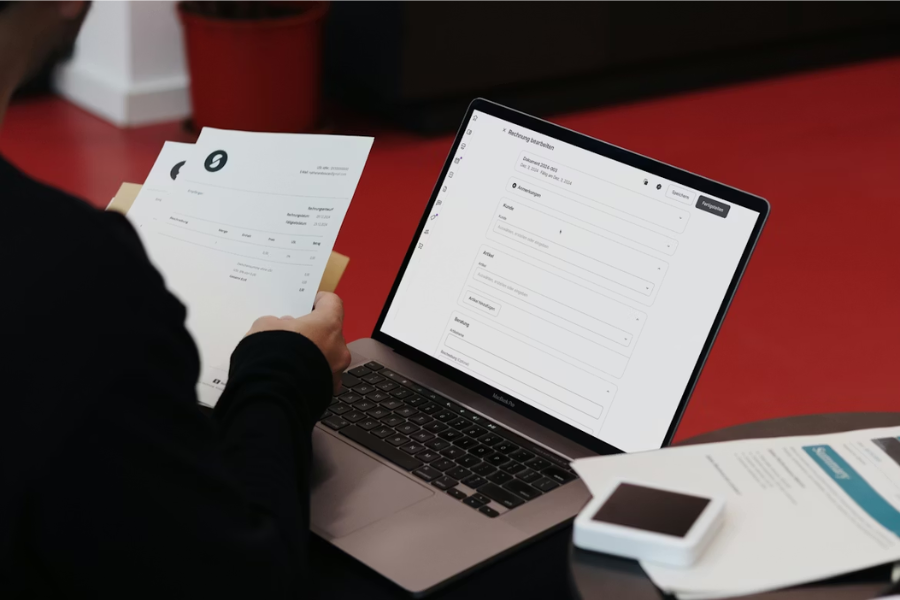
Choosing the right e invoicing software UAE is not a routine purchase. It directly impacts compliance, data flow, and how efficiently your finance team operates under regulatory pressure.
Most businesses get this wrong by comparing features or pricing first. The real difference lies in how systems handle validation, integration, and compliance in real conditions.
With UAE moving toward structured, system-driven invoicing, the risk is not immediate failure but gradual operational friction, rising errors, and compliance exposure.
This guide gives you a practical framework to evaluate any invoicing solution based on real performance, not just demos.
What e-Invoicing Software Actually Does in the UAE Context
There is a common misconception that e-invoicing software is just a digital invoice generator. In reality, that is only a small part of its role.
A cloud e invoicing software UAE solution acts as a compliance and transformation layer between your ERP and regulatory systems. It converts invoice data into structured formats, validates it against rules, and ensures it is transmitted and stored in line with UAE requirements.
Traditional systems were built for human-readable documents, not machine validation. That is why even a well-functioning ERP cannot meet compliance needs on its own. A proper system ensures validation happens before submission, formats align with regulatory schemas, and invoices move through approved channels without errors.
This is where choosing the best e invoicing software UAE becomes critical. It is not about generating invoices but ensuring they are compliant, accurate, and audit-ready. Businesses relying on cloud e invoicing software UAE gain consistency in validation, transmission, and storage, which reduces manual effort and risk. Ultimately, the best e invoicing software UAE is the one that works seamlessly with your existing systems while handling compliance in the background.
Why UAE Businesses Are Accelerating Adoption
Businesses are not adopting e-invoicing out of preference. They are adapting because operational pressure leaves no alternative.
The first driver is automated enforcement. Instead of periodic audits, invoices are now validated at submission. Errors are identified instantly, which makes accuracy non-negotiable.
The second driver is ERP limitation. Most systems can generate invoices but cannot validate or route them according to regulatory frameworks. This gap is why companies are actively searching for the best e invoicing software UAE to bridge compliance requirements.
The third driver is scale. As invoice volumes grow, manual corrections become inefficient and costly. What once worked with spreadsheets now creates bottlenecks across finance teams.
This is why adoption of cloud e invoicing software UAE is accelerating. It enables automation, reduces errors, and supports scalability without increasing operational complexity. Businesses that implement the best e invoicing software UAE are not optimizing processes. They are ensuring continuity under evolving regulatory conditions, where relying solely on internal systems is no longer sustainable.

Core Capabilities You Should Evaluate
Most buyers focus on features. Experienced teams focus on capabilities. The difference is critical.
- Structured Validation That Prevents Failures – Validation is often misunderstood as a simple checklist. In reality, it is a layered process that determines whether your invoice will be accepted or rejected. A strong system performs schema validation to ensure the format is correct, and business rule validation to ensure the data makes sense in a regulatory context. For example, VAT calculations, invoice types, and mandatory fields must align with defined rules. If validation happens after submission instead of before, your team will constantly deal with rejected invoices. That leads to manual rework and delays that compound over time.
- Integration That Does Not Disrupt Existing Workflows – Integration is where most implementations fail. It is not enough for a system to connect to your ERP. It must integrate without forcing you to change how your business operates. A reliable system maps your existing invoice data into structured formats without requiring you to rebuild processes. It should support both batch processing for high volumes and real-time processing for time-sensitive transactions. If your team needs to change how invoices are created or processed just to fit the software, you are solving the wrong problem.
- Secure and Compliant Transmission – Invoice submission in the UAE is not simply sending a file. It requires routing through approved networks with strict security and compliance standards. A capable system ensures that invoices are transmitted securely, handles retries if failures occur, and maintains consistency in submission processes. This reduces the risk of lost or delayed invoices. Manual handling at this stage introduces unnecessary risk and should be avoided entirely.
- Full Lifecycle Visibility – One of the most overlooked requirements is visibility. Finance teams need to know what is happening at every stage of the invoice lifecycle. This includes tracking validation status, submission status, acceptance or rejection outcomes, and maintaining a complete audit trail. Without this, teams operate reactively instead of proactively. When visibility is built into the system, issues can be identified and resolved before they escalate.
Types of e-Invoicing Solutions Available
Not all solutions are designed for the same level of complexity. Choosing the wrong type creates long-term inefficiencies.
- ERP-native solutions are suitable for businesses with simple workflows, but they often lack advanced compliance capabilities. Middleware solutions provide flexibility but require technical expertise to implement and maintain.
- Cloud platforms offer scalability and flexibility, but they still require proper integration planning. Managed services remove most of the operational burden by handling validation, transmission, and compliance externally.
- For businesses that want to avoid managing these complexities internally, solutions like Advintek e-Invoice as a Service provide a structured approach where compliance and operational execution are handled as a service rather than a system.

How to Evaluate Vendors Step by Step
Selecting a vendor requires a structured approach. Relying on demos or marketing materials leads to poor decisions.
- The first step is to verify compliance coverage. The system must support UAE-specific frameworks and adapt to regulatory updates. If a vendor cannot clearly explain how they handle compliance, that is a red flag.
- The second step is to test integration scenarios. Instead of watching a demo, request a real workflow demonstration that shows how invoice data moves from your ERP to the compliance system. This reveals practical limitations.
- The third step is to evaluate error handling. Systems fail in real environments. What matters is how they recover. Look for automatic retries, clear error logs, and actionable messages that your team can understand without technical support.
- The fourth step is to assess operational impact. A good system reduces manual work and simplifies processes. If it introduces additional steps or dependencies, it will face resistance internally.
- The final step is to evaluate support and updates. Regulations will change, and your system must evolve with them. A vendor that does not actively maintain and update their system becomes a long-term risk.
When a Managed Approach Makes More Sense
There is a point where managing e-invoicing internally becomes inefficient. This is especially true for businesses with complex operations or limited technical resources.
A managed approach shifts responsibility from internal teams to specialized providers. Instead of building and maintaining systems, businesses rely on services that handle validation, transmission, and compliance as part of a managed workflow.
For example, businesses exploring options can review invoice solutions at Advintek to understand how a managed model removes operational burden and reduces compliance risk.
This approach is particularly useful when internal teams need to focus on core business activities rather than compliance infrastructure.
Frequently Asked Questions
1. What is e-invoicing software in the UAE context and how is it different from traditional invoicing?
E-invoicing software in the UAE converts invoice data into structured, machine-readable formats that can be validated and transmitted through regulatory systems. Traditional invoicing focuses on human-readable documents like PDFs, which are not sufficient for automated compliance. The difference lies in how data is processed, validated, and tracked rather than how the invoice looks.
2. Can small businesses use cloud e invoicing software UAE without complex setup?
Yes, but the complexity depends on the business structure and existing systems. Many cloud solutions are designed to simplify setup, but integration with accounting or ERP systems still requires proper configuration. Small businesses benefit from simpler workflows, but they must still meet the same compliance requirements as larger organizations.
3. How do I know if an invoicing solution is fully compliant with UAE regulations?
A compliant solution should support structured invoice formats, perform real-time validation, and enable transmission through approved networks. It should also maintain audit-ready records. The best way to verify compliance is to ask vendors for detailed explanations of how their system aligns with UAE frameworks rather than relying on generic claims.
4. What happens if an invoice fails validation or gets rejected?
If an invoice fails validation, it must be corrected and resubmitted. A strong system identifies errors before submission, reducing rejection rates. If rejection occurs after submission, the system should provide clear error messages and allow quick correction. Poor systems make this process manual and time-consuming.
5. Is a managed e-invoicing service better than owning the software?
It depends on your internal capabilities. Managed services are better for businesses that want to minimize operational involvement and reduce compliance risks. Owning software provides more control but requires ongoing management, updates, and technical expertise.
The Systems You Don’t Notice Are Usually the Right Ones
The best e-invoicing systems are not the ones your team talks about every day. They are the ones that work quietly in the background, processing invoices without interruptions, reducing errors, and keeping your business compliant without constant intervention.
Most problems do not appear immediately. They build over time through small inefficiencies, repeated manual corrections, and increasing compliance pressure. That is why choosing the right system early matters.
For businesses that prefer a structured and managed approach instead of building internal complexity, platforms like Advintek offer a practical path. They remove operational friction and allow teams to focus on financial control rather than compliance troubleshooting.
The goal is not to adopt the most advanced system. The goal is to adopt the system that works reliably under your real conditions and continues to work as your business scales.





3 Comments
[…] businesses evaluating solutions, this UAE e-invoicing software buyer guide highlights key features to avoid these […]
[…] choosing solutions should evaluate correction capabilities carefully, as highlighted in the UAE e-invoicing software buyer guide, which explains how platforms manage validation and correction […]
[…] To understand system selection criteria, explore this UAE e-invoicing software buyer guide. […]